

How Ready Are Your Software-Enabled Medical Devices for Evolving Cybersecurity and Regulatory Requirements?  

Connected and software-enabled medical devices often remain in the field for years longer than the underlying technologies on which they were originally built, increasing cybersecurity, safety, and regulatory risks for manufacturers.

immagine landing
With FDA Section 524B requirements, updated FDA cybersecurity guidance, and QMSR alignment effective February 2026, cybersecurity evidence has become a critical regulatory submission and market-access requirement for connected and software-enabled medical devices. Similar expectations are now reflected across EU MDR/IVDR, UK MHRA, IMDRF, and other international regulatory frameworks. 
Manufacturers are now expected to integrate cybersecurity throughout the total product lifecycle (TPLC), from secure design and development through deployment, vulnerability monitoring, coordinated vulnerability disclosure (CVD), patch management, and postmarket surveillance.

Download the free e-book to learn: 

  • check markWhat the latest FDA cybersecurity guidance and QMSR alignment mean for medical device manufacturers
  • check markHow Section 524B is reshaping cybersecurity and regulatory expectations for cyber devices
  • check markWhat regulators expect in premarket cybersecurity submissions, including SBOMs, threat modeling, security architecture views, and security testing
  • check markHow to implement cybersecurity risk management and SPDF activities across the product lifecycle
  • check markWhy postmarket cybersecurity management, vulnerability monitoring, and coordinated disclosure processes are becoming essential regulatory expectations
  • check markHow to reduce long-term cybersecurity and supply-chain risks across connected medical devices and IVDs 
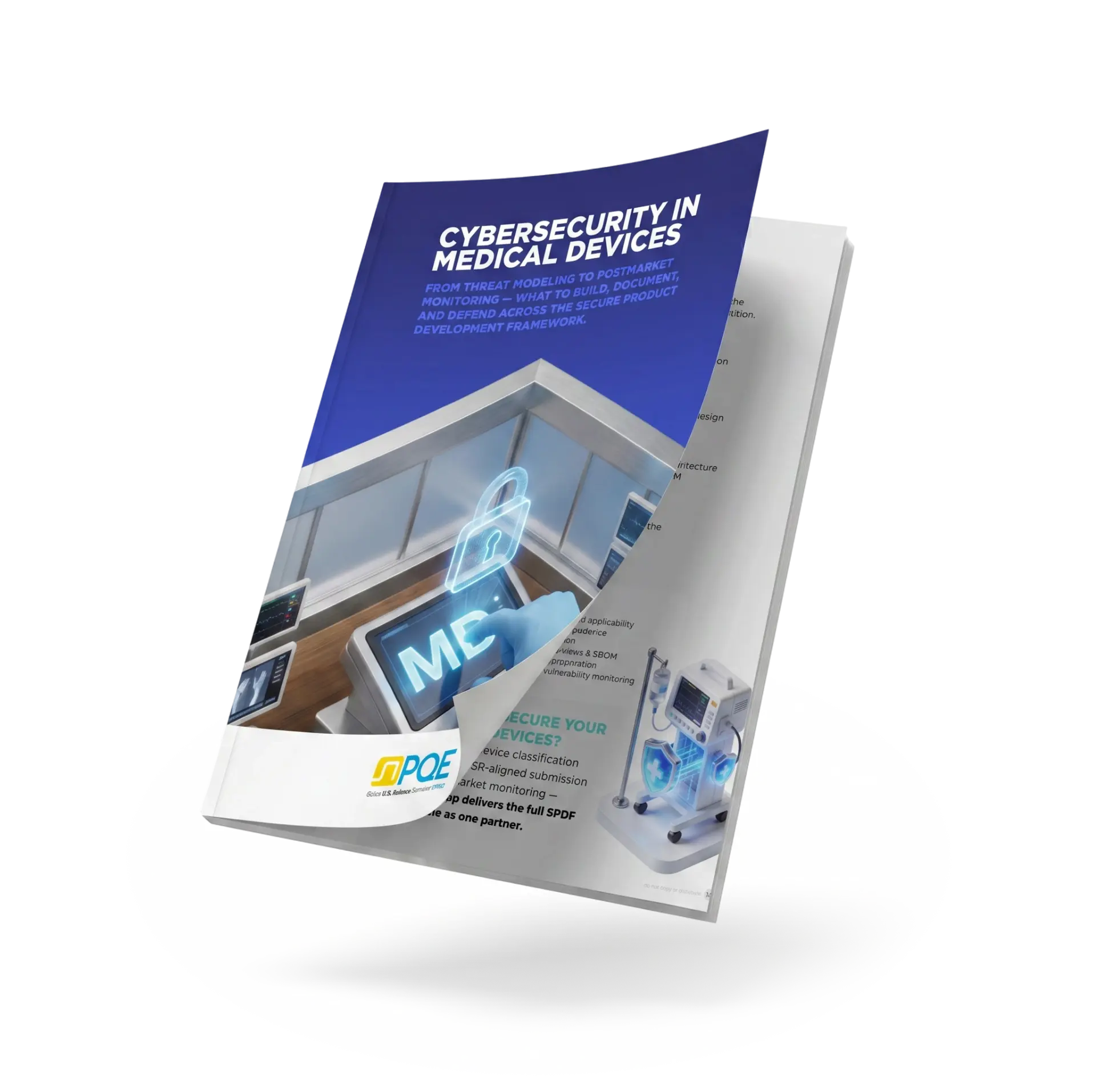
Mockup-1

Please review our cookie policy and privacy policy.

Want to know more?

Check out our solutions for coordinating your digital development safely and quickly.